Dabs & concentrates
Cannabis extracts and resin products sold in forms such as wax, shatter, badder, rosin and live resin. Their strength and intended uses vary.
Smokegear / buyer education · 2026
Choose the concentrate first, then choose the device that is designed for it. An electric dab rig (e-rig) usually suits a larger, at-home setup; a dab pen or wax pen prioritizes portability; and a 510 cartridge battery is for compatible prefilled vape-oil cartridges. None is automatically the safest or “best” choice for everyone.
This is an educational buyer guide, not a three-person product test or a device performance ranking. Concentrates may contain high levels of THC and carry significant health risks.
Start with the terms
A concentrate is the material. Dabbing is one way to consume certain concentrates. An e-rig or wax pen is the device. Confusing these terms leads to buying the wrong equipment.
Cannabis extracts and resin products sold in forms such as wax, shatter, badder, rosin and live resin. Their strength and intended uses vary.
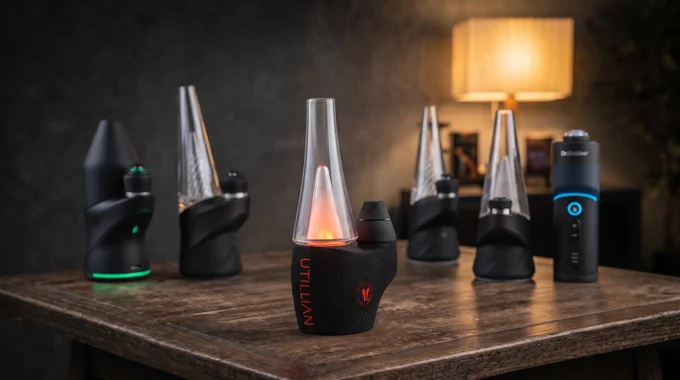
Electronic heating in a larger dab device, usually with a dedicated concentrate chamber and often water filtration. Sometimes called an electric dab rig.
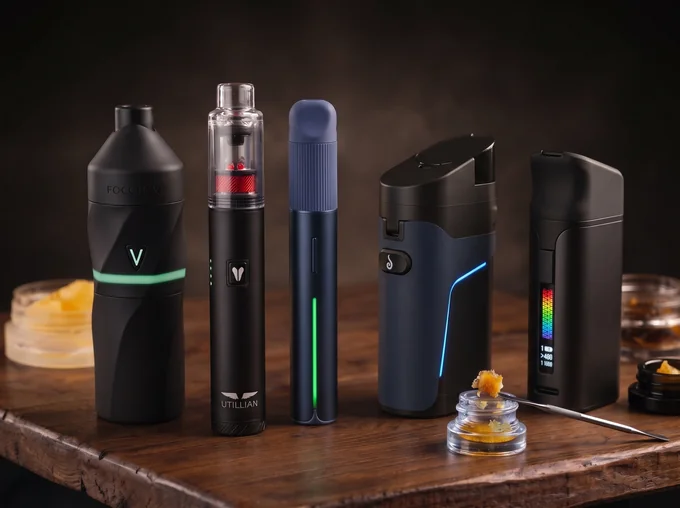
A compact, refillable concentrate vaporizer for appropriate solid or semi-solid extracts. Not the same thing as a prefilled oil cartridge.
Direct answer: Dab pen and wax pen are often two names for the same portable concentrate-device category. E-rig and electric dab rig are likewise usually two names for the larger electronically heated dab-device category.
The material comes first
Terms such as wax, shatter, budder, rosin, live resin and distillate do not all describe the same thing. Some refer to texture, some to extraction, and some to refinement. A name or appearance alone cannot prove purity, potency or device compatibility.
Soft or semi-solid extract; “wax” describes consistency more than a fixed potency or extraction method.
Buyer check: Confirm concentrate-chamber compatibility; do not assume every pen takes every wax.
Spreadable, soft-textured concentrates. Naming varies by brand and production.
Buyer check: A compatible, easy-to-clean concentrate chamber may be more useful than a very small opening.
Firm, often translucent extract that can break into small pieces.
Buyer check: Check whether the device supports solid extracts and whether handling is practical.
Breaks apart easily and may be harder to transfer neatly.
Buyer check: Consider handling and cleanup, not just heat features.
Usually produced from fresh-frozen plant material using solvents; its name describes processing, not safety or THC strength.
Buyer check: Read the product’s full ingredients, extraction details and THC/CBD label.
Hash rosin is pressed from collected cannabis trichomes or hash using heat and pressure. Live rosin generally starts with fresh-frozen material processed into hash before pressing. “Solventless” does not mean harmless.
Buyer check: Check legal product testing, intended use and device compatibility.
May include terpene-rich liquid, crystalline THCA or both; consistency can vary widely.
Buyer check: Make sure the device and chamber suit the actual texture; do not choose solely by THC.
Distillate is a highly refined extract; vape oil is a formulated liquid that may contain distillate or other extracts. Cartridge formulations are not necessarily suitable for a loadable dab chamber.
Buyer check: Follow the labeled intended use—do not pour cartridge oil into a wax chamber.
Broad category with varied textures and residues; not all forms are suitable for concentrate-only heaters.
Buyer check: Check device documentation explicitly; hash may contain more plant material.
Choose regulated, accurately labeled products with clear ingredients and intended-use information. Even legal extracts can contain very high THC and may be unsuitable for some people.
Understand the hardware
The right choice depends on the form of the extract and whether you value portability, water filtration, accessible controls or easy cleanup. The labels used by retailers can overlap, so verify the chamber and intended material.
| Device type / search term | Usually made for | Typical trade-off | Best question to ask |
|---|---|---|---|
| Electric dab rig (e-rig) | Compatible solid or semi-solid concentrates; usually larger, often water-filtered | More parts, less pocketable, cleaning and replacement glass/chambers | Will I mainly use it at home, and is this concentrate supported? |
| Dab pen / wax pen | Loadable solid or semi-solid extracts in a small heated chamber | Compact chamber, regular cleaning, battery and coil/atomizer care | Do I want a pocket-size device with a refillable concentrate chamber? |
| Portable concentrate device / compact rig | Varies: some designs blur the line between an e-rig and a pen | May be bulkier than a pen and use brand-specific parts | Is it a chamber-based device or a cartridge-based device? |
| 510 cartridge battery | Compatible prefilled cannabis oil cartridges | Depends on cartridge fit and oil formulation; not for loading wax | Is my extract sold in a compatible, labeled cartridge? |
| Dry herb vaporizer | Dried cannabis flower (unless the manufacturer specifically supports concentrates) | Different heating chamber and residue requirements | Am I buying flower or an extract? |
This is a category comparison, not a lab safety rating or a claim that one device produces harmless aerosol.
Choose by daily needs
Here is a practical, non-brand-first decision guide. Compatibility and legal product labeling matter more than a feature list.
You want a stable at-home format and prefer a larger setup over something pocketable.
You specifically need a compact device intended for solid or semi-solid concentrates.
You are looking at a legally sourced, properly labeled prefilled oil cartridge rather than loose wax.
Which is better for beginners? A simpler device can be easier to maintain, but concentrated THC is not necessarily a beginner-friendly product. If you are new to cannabis, prioritize understanding potency and risks before choosing hardware.
Check before spending
Labels, intended use and quality controls are more useful than marketing descriptions such as “premium,” “live” or “strongest.”
Check the licensed/authorized supply chain where cannabis is legal. Avoid unlabeled products or extracts whose origin cannot be verified.
Check the labeled values and units (often mg/g for inhaled extracts). “Total THC” accounts for THC that can become available after activation; higher THC is not a quality score.
Confirm it is labeled for the intended method of consumption. Do not treat oral oils, vape liquids and dab concentrates as interchangeable.
Is the material brittle, creamy, crumbly, resinous or in a sealed cartridge? Confirm the device explicitly supports that format.
Look for product identification, lot number, packaging date and manufacturer contact information where regulated labels require them.
Check replacement chambers, seals, batteries, cleaning supplies and warranty. A lower device price can come with more upkeep.
A premium electric dab rig does not make an unlabeled concentrate safer, and a “solventless” description does not guarantee zero contaminants. Always assess the material independently of the device.
Where your shortlist fits
These are device examples, not a ranking on this overview page. No scores are assigned here. Where available, separate category pages should present model-level evaluations and rankings based on the actual user-panel data, rather than inferred or manufacturer-supplied ratings.
Consider chamber format, temperature options, water/glass upkeep, portability and replacement parts.
Some portable models—including modular designs—are not literally pen-shaped. Verify how each one loads concentrates and how it is maintained.
Listing a model here is not a product endorsement, score, ranking or assurance that all concentrates are compatible. For model-by-model evaluation, see the dedicated Electric Dab Rigs and Dab Pens pages; use only documented real-user scores when publishing rankings.
Real buyer questions
Concentrates are cannabis products made to contain cannabinoids in a more concentrated form than dried flower. “Dabs” usually refers to solid or semi-solid extracts heated on a dabbing device. They can be high in THC.
Usually yes in everyday shopping language: both commonly mean a portable device with a refillable chamber designed for solid or semi-solid cannabis concentrates. Check the actual chamber type instead of relying on the name alone.
An e-rig is an electronically heated dab device that usually offers a larger setup and often water filtration. It avoids the need for a torch, but it still heats high-potency concentrates and does not remove inhalation risks.
E-rigs generally prioritize home use, larger chambers and controllable sessions; wax pens prioritize pocket size and fewer parts. Both must be matched to the material and the device’s instructions.
No. A loadable wax pen typically heats solid or semi-solid concentrates in a chamber. A 510 battery powers a compatible prefilled oil cartridge. A device described as a “vape pen” is not automatically a wax pen.
Neither is inherently safer or better for every buyer. Live resin and live rosin generally describe different processing methods. Read the actual label for potency, ingredients, intended use and quality controls rather than deciding by the name.
Not necessarily. Shatter, budder and wax mainly describe texture. Their THC/CBD content varies by product; use the labeled total THC and total CBD rather than assuming strength from appearance.
Do not assume so. Most concentrate devices are intended for extracts, not loose flower. Only use dried material when the specific manufacturer explicitly supports it.
Do not assume oils or cartridge formulations are compatible with a loadable wax chamber. Follow the product’s intended-use label and the device manual; some additives and liquids are unsuitable for direct heating in a dab chamber.
Start with material legality and clear labeling, then decide whether home use or portability matters. High-potency concentrates may not be suitable for someone new to THC; lower-potency options and health guidance deserve priority over buying the most powerful device.
Check that the product is legally sourced and labeled for inhalation, compare total THC and total CBD, review ingredients and batch information, then confirm its actual texture works with the device. Avoid unlabeled or unverified extracts.
No. Electric heating replaces a torch, but aerosol inhalation, burns, device malfunctions and high-THC health effects can still be concerns.
Health and safety
No. Cannabis concentrates may contain very high THC levels. Higher-potency use is associated with greater risks including anxiety, dependence, impairment and certain mental-health effects; inhaling heated extracts can expose users to harmful byproducts or contaminants. Electric heating eliminates the need for a torch but does not eliminate these risks.
This is general educational information, not medical advice. Avoiding cannabis is the most effective way to avoid cannabis-related risks. Cannabis use should be avoided during pregnancy and breastfeeding; people with a personal or family history of psychosis or other relevant health concerns should seek qualified medical advice.
The references below support public-health and safety information. Product names above are category examples, not verified product-test results on this page.
The takeaway
Begin with the material and its label, not with a flagship device. If a properly labeled concentrate is a compatible solid or semi-solid extract, compare an e-rig for the at-home format with a wax pen for portability. If the product is a prefilled oil cartridge, look at compatible cartridge batteries instead. Check legality, potency, safety, cleaning and parts support before deciding.
Smokegear’s rule: Substance identity → label & safety → compatible device type → ownership needs → specific model. A headline ranking should never replace those checks.
How are these comparisons evaluated? Read the Smokegear testing methodology and learn which device categories have four-user or three-user test panels. Product artwork is illustrative and is not evidence of laboratory measurements.